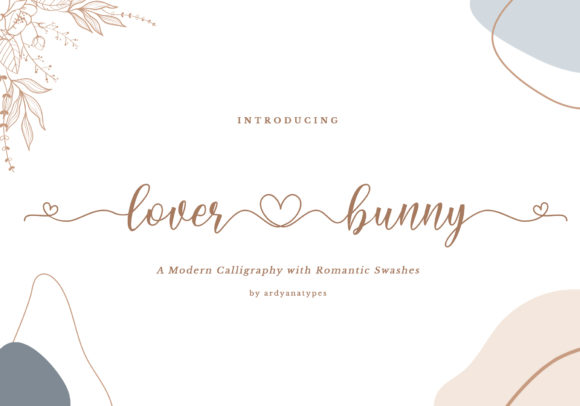
Lover Bunny: A Cute Script Font for Elegant Branding
There I was, staring at a blank brand board, trying to find the perfect typeface to bring a new boutique’s identity to life. The client wanted something that felt both timeless and approachable, a font that could speak to a modern audience while still carrying a sense of old-world charm. That’s when I reached for Lover Bunny, a cute script font from the Script Amp collection. It didn’t take long to realize this wasn’t just another pretty typeface—it was a real contender in the world of premium fonts.
The Visual Personality of Lover Bunny
Lover Bunny has a distinct personality. It’s not overly ornate or fussy, but it carries an undeniable elegance. The curves are soft yet confident, and the overall structure feels authentic, like it was written by hand rather than designed on a computer. It’s the kind of font that can make a logo feel more personal, more human. There’s a warmth to it that other script fonts sometimes lack, making it ideal for brands that want to convey friendliness without sacrificing sophistication.
When I first tested it on a logo concept, I was struck by how well it balanced style with clarity. The lowercase letters have a gentle flow, and the uppercase forms are bold enough to stand out without being overwhelming. It’s a font that works best when used in short phrases—logos, headlines, or taglines—where its character can shine without getting lost in a sea of text.
Lover Bunny in Real-World Branding Projects
I’ve used Lover Bunny across several design assets, from business cards to social media graphics. On a packaging mockup for a small skincare line, it added a touch of refinement that matched the product’s natural aesthetic. The font’s swashes and ligatures gave the labels a custom feel, making them stand out on the shelf. In a website header, it brought a sense of movement and energy, pairing beautifully with a clean sans serif for contrast.
On a printed business card, it looked elegant but not too flashy. It held up well at smaller sizes, which is a big plus for a script font. I also tried it on a social media post, where it worked as a headline, drawing attention without clashing with the background. It’s versatile enough to fit into different design contexts, but it really shines when used as a display font.
Strengths and Limitations
Lover Bunny excels in visual storytelling. Its friendly yet refined look makes it great for brands that want to feel accessible but still professional. It’s especially effective in industries like fashion, food, beauty, and lifestyle, where a warm, personal touch can make a big difference. But it’s not a font you’d want to use for body text. At smaller sizes, the details can get lost, and the intricate strokes may reduce readability.
It also isn’t the best choice for formal corporate branding. If you’re designing for a law firm, financial institution, or tech startup, you might want something more structured. Lover Bunny is better suited for creative studios, boutique shops, or any brand that wants to communicate a sense of personality and authenticity.
Practical Tips for Using Lover Bunny
If you’re considering Lover Bunny for a project, test it in multiple scenarios before finalizing your design. Try it on different backgrounds, sizes, and layouts to see how it performs. Pay attention to how it interacts with other typefaces. Pairing it with a simple serif or sans serif can help balance its decorative elements and improve legibility.
Also, check the font’s file formats and webfont availability. Lover Bunny likely comes in standard formats like OTF and TTF, and if it’s available as a webfont, that’s a big plus for digital projects. Make sure to review the commercial licensing terms before using it in client work or print materials. Fonts can be tricky when it comes to usage rights, so it’s always better to double-check.
Final Thoughts on Lover Bunny
As someone who’s spent years working with typography, I can say that Lover Bunny is a standout in the Script Amp collection. It’s a rare combination of charm and professionalism, making it a go-to font for many design situations. Whether you’re working on a logo, a packaging label, or a social media campaign, it brings a unique character that can elevate your brand’s visual identity.
It’s not a one-size-fits-all solution, but when used correctly, it can add a level of sophistication that’s hard to replicate. If you’re looking for a cute script font that doesn’t sacrifice style for practicality, Lover Bunny is definitely worth exploring. It’s a font that feels right at home in the hands of a designer who values both creativity and clarity.